
Last week I had a violin, which I made ten years ago, come in the workshop for a bit of maintenance and adjustment.
Sometimes when I see one of my older instruments, I think perhaps I would do something a little differently now, but with this violin; well, I just like it!
For a maker, just as for a player, liking an instrument is ultimately the most important thing; you can analyse what an instrument is doing in different registers, its response and a whole load more considerations, just like a maker can review arching shapes or edgework, but if you don’t like it, you don’t like it.
I like this violin both for its look and, especially now I have adjusted it, its sound.
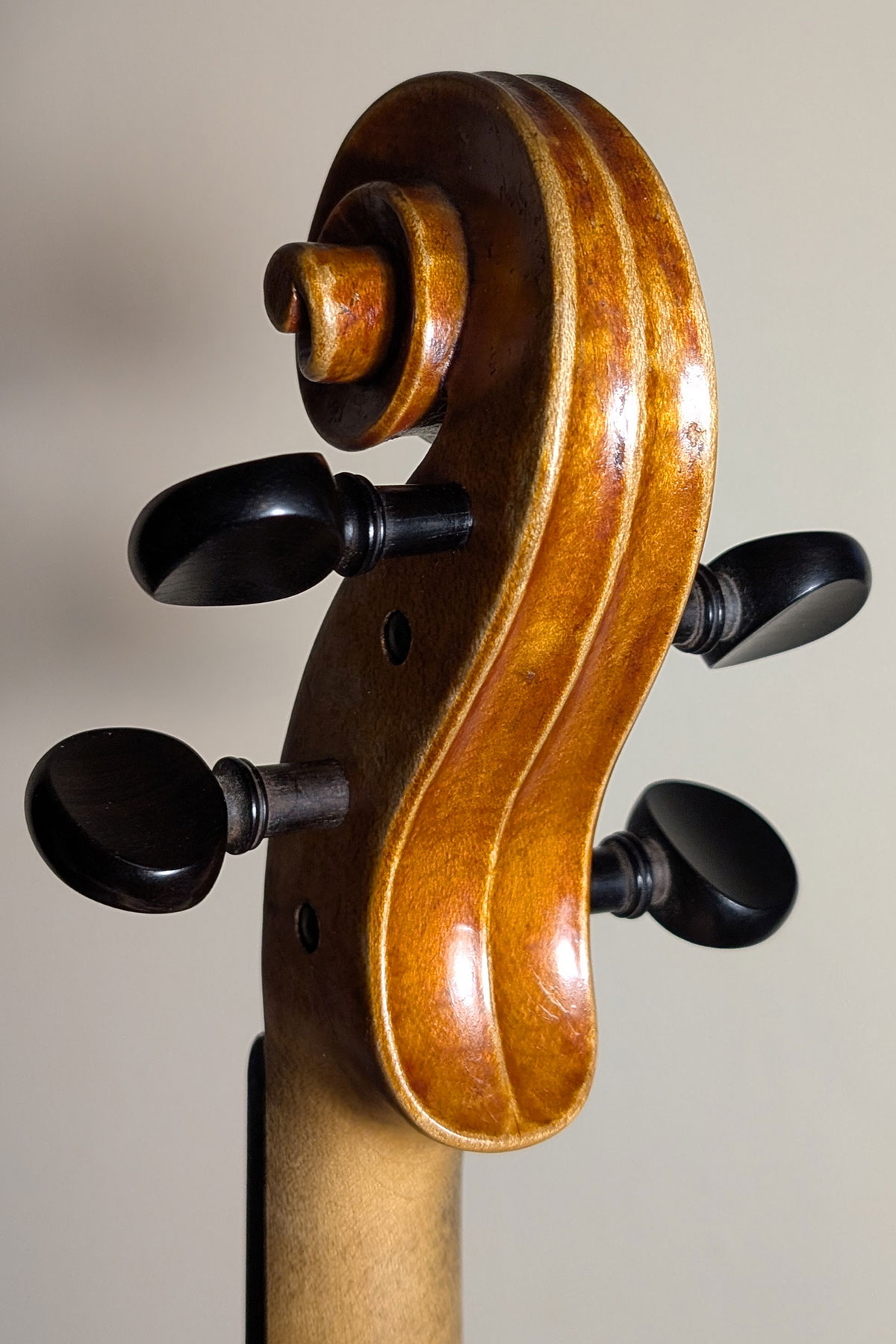
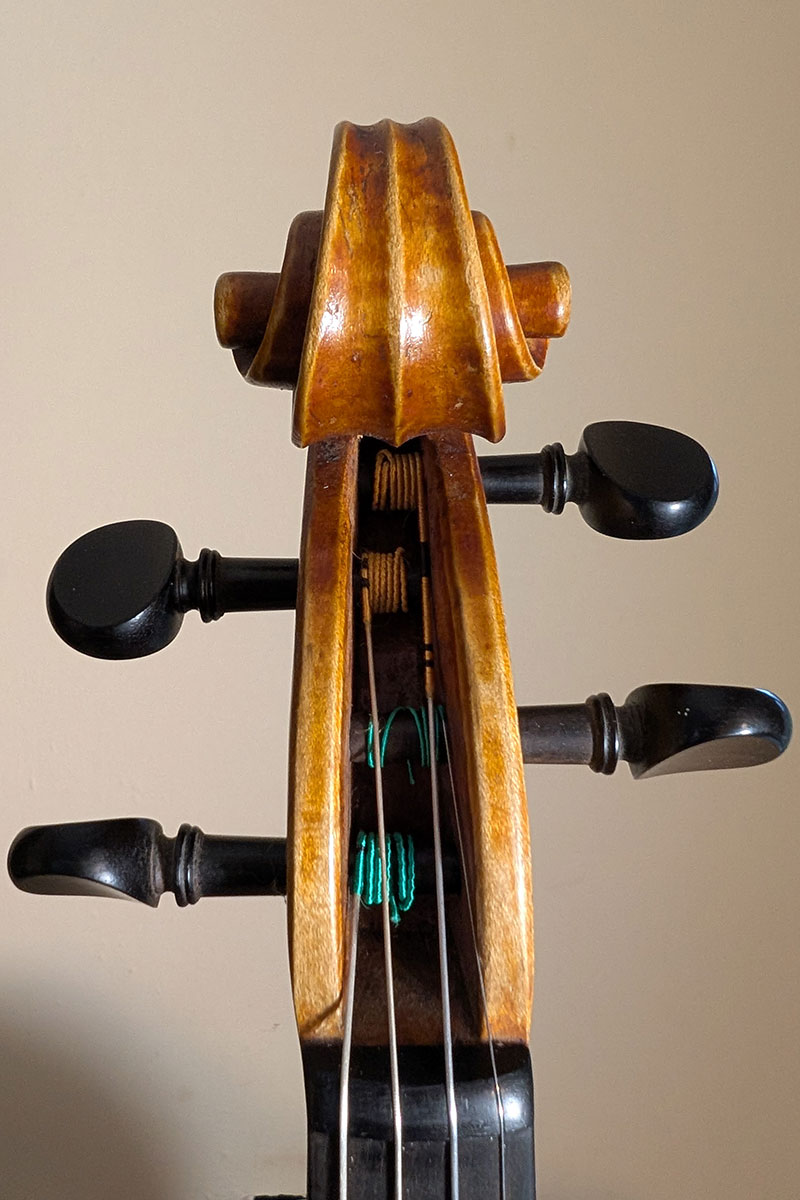
For those who like to know this sort of thing, it is modelled on the ‘Alard’ Guiseppe Guarneri (del Gesu) which is in the Musée de la Musique in Paris, an instrument in very good condition, and in terms of del Gesu’s work, halfway between the tidy, carefully made instruments of his early years and his more flamboyant later work.
My violin reflects the original, there is no doubt as to what model I was using, but equally, to those who know, it is very much one of my instruments too. Trying to say why is difficult for me because although I am very conscious of some of the things I do, other aspects have developed organically, but I know other instrument makers would say that my instruments have a particular style.
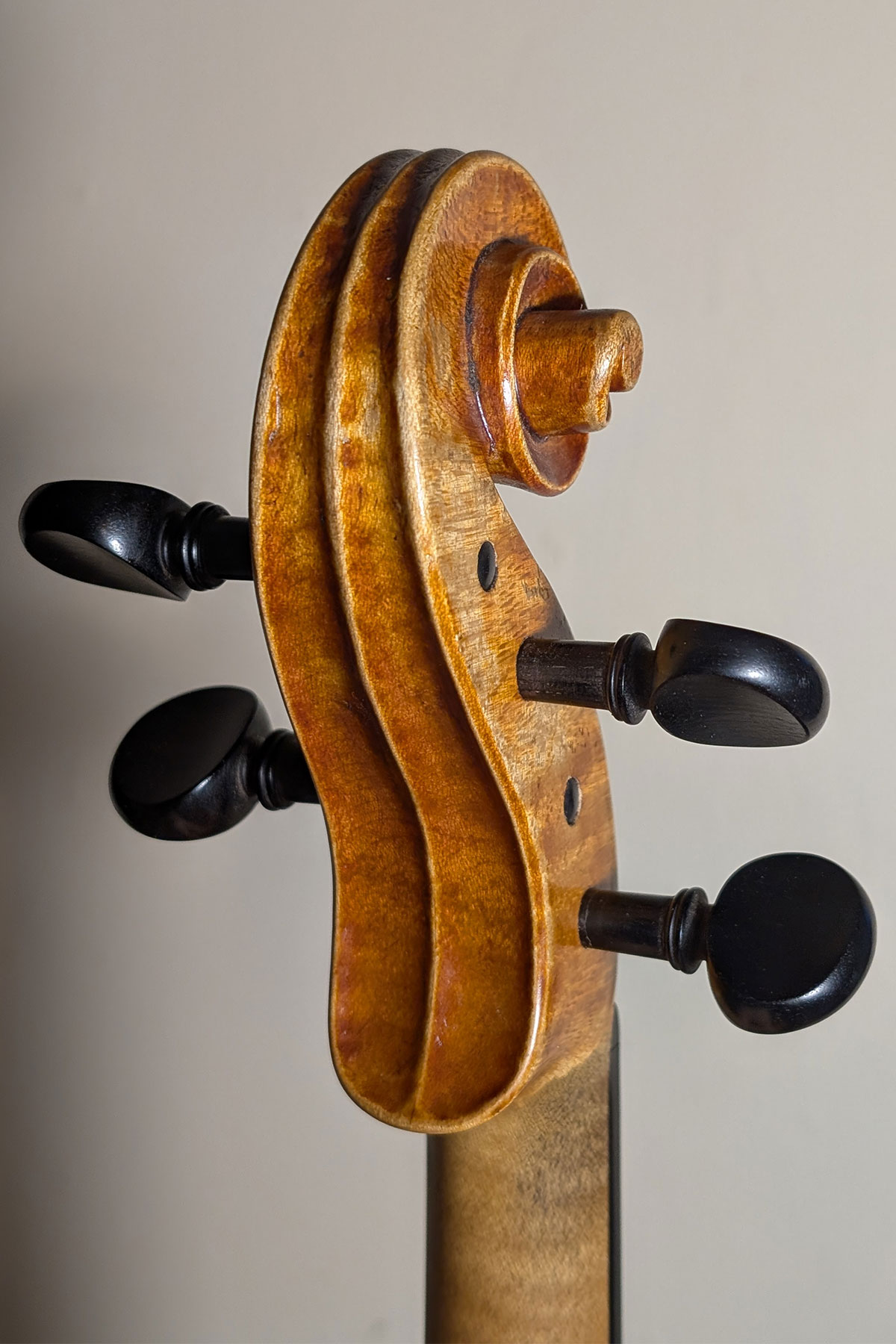
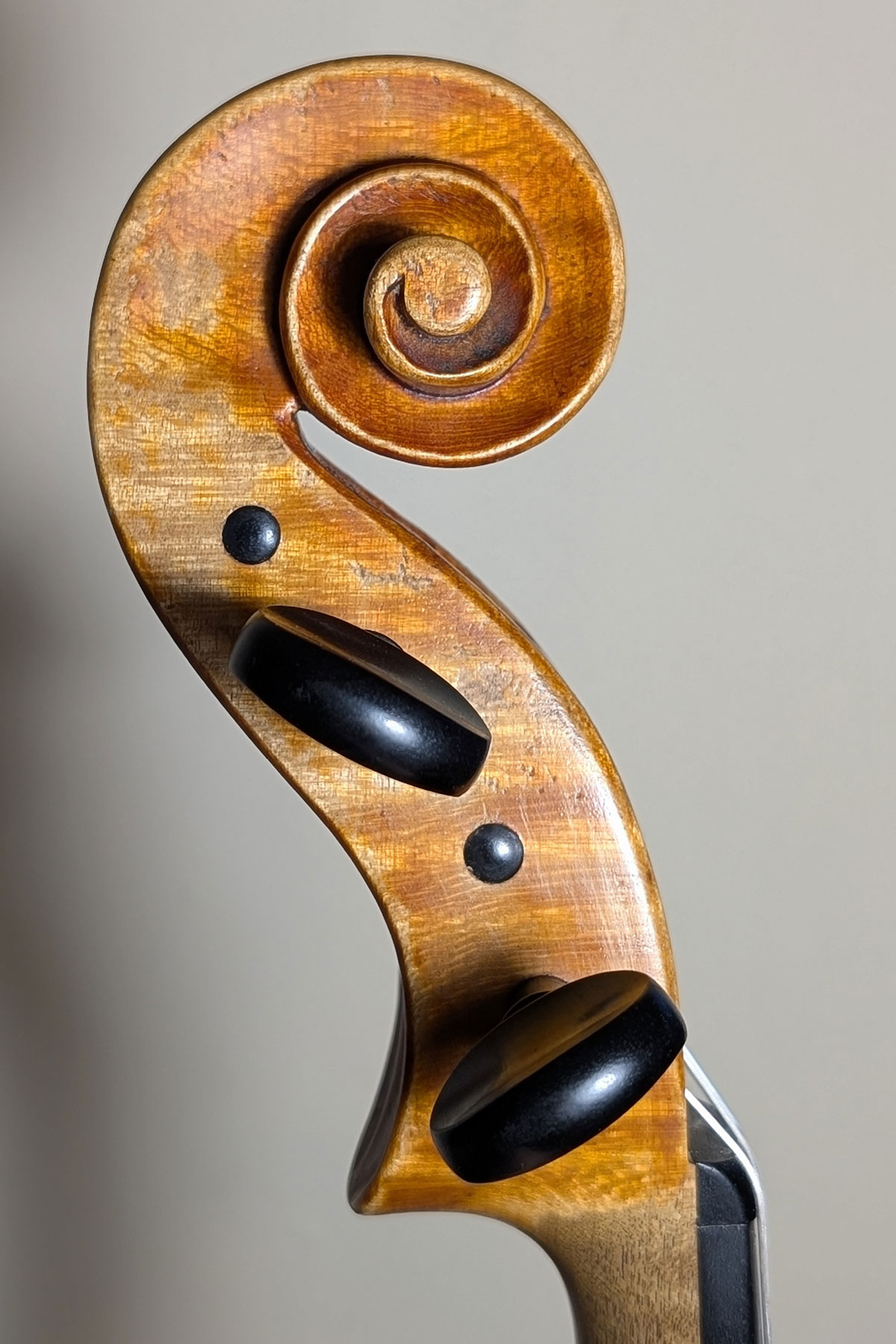
Talking to a colleague last week, she said how when making instruments such as this, I manage to get the right sort of movement, in the scroll for instance, without absolutely perfect lines and even chamfers, something that del Gesu pulled off to perfection. (or should that be imperfection?) To under1stand why I am delighted that others can see this, have a look at my article – The Spirit of Classical Violin Making.
I also know that those who are familiar with my instruments also recognise the sound, at least sometimes, as being mine. Describing sound is even harder than describing style of workmanship, but what I am really after is what my erstwhile mentor, Roger Hargrave, described as a ‘classy’ sound. Fundamentally, he meant the deep-down soul of an instrument, the ability to give without stopping, to blast out the lower registers and to soar in the higher ones; it is the body, richness and grit of the core and the smoothness of the light, the sturdiness of the tonal material which you can sculpt with the bow. (I said that describing sound is hard!)
In the end, the only way to judge an instrument is by playing. For me, I have particularly enjoyed having my instruments played by those who really know what they are looking for, musicians who trust their own abilities and judgement, no matter what they are playing, musicians, who, through their comments and by the sound I can hear they make, have been and are still amongst my most important mentors.
Recent Comments